Early access · free · no account needed
Search inside classic books
by idea, not just keyword
Describe what you're looking for in your own words. BookLens finds the exact passages across 204 great books, and every quote links back to its source.
- What do books say about loneliness?
- people questioning the meaning of their lives
- "it was the best of times"
- solitude in nature
- classic books
- 204
- classic books
- searchable passages
- 100,000+
- searchable passages
- of AI quotes checked
- 100%
- of AI quotes checked
You remember the idea, not the words
Ordinary search only finds the exact words you type, and chatbots will happily invent a quote that sounds right. BookLens finds what an author actually wrote about your idea, and shows you where.
How it works
From question to passage in seconds
- 1
Ask in your own words
Type a question, a theme, or a half-remembered line. No need to guess the author's exact wording.
- 2
BookLens reads for meaning
It matches ideas as well as keywords across more than 100,000 passages, then ranks the closest ones.
- 3
Get passages you can trust
Every result shows the book, chapter and source. AI answers only keep quotes found word for word in the text.
Answers you can check
Every quote is verified against the book
You ask: How did Thoreau feel about being alone?
Thoreau describes solitude as a welcome companion rather than something to escape, and suggests people often feel lonelier among others than by themselves P1.
I never found the companion that was so companionable as solitude.✓ verified in P1
Why BookLens
Built for people who want the real text
Find ideas, not just words
Search “people questioning the meaning of their lives” and find William James, Dostoevsky and Chekhov, even when they never use those words.
Quotes that really exist
Every quote in an AI answer is checked against the original passage. Anything that can't be verified is removed before you see it.
Always see the source
Book, author, chapter and a link to the public-domain original, on every result. Easy to cite, easy to check.
Read in context
Jump from a match to the passages around it, then to similar passages in other books or by the same author.
Ask a whole book
Open any book and ask it a question. Answers cite the exact chapters they came from.
Free and private
No account needed. Your searches aren't logged against you.
Who it's for
Made for readers, writers and learners
Students. Find evidence for an essay in minutes and cite the exact chapter.
Writers. Track how great authors handled a theme, a mood or a scene.
Teachers. Pull passages on a topic from many books for a lesson or a reading list.
Curious readers. Rediscover a line you half remember, or explore an idea across centuries.
Be first to get new books and features
We're adding more books, saved collections and reading lists. Join early access and we'll let you know as they land.
In the collection
Browse all 204 books- A Christmas Carol in Prose; Being a Ghost Story of Christmas
A Christmas Carol in Prose; Being a Ghost Story of Christmas
Charles Dickens (1812–1870)

A Connecticut Yankee in King Arthur's Court
Mark Twain (1835–1910)
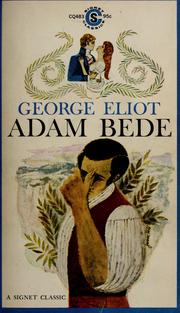
Adam Bede
George Eliot (1819–1880)
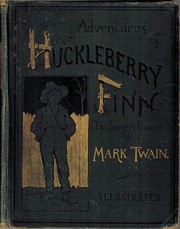
Adventures of Huckleberry Finn
Mark Twain (1835–1910)

Agnes Grey
Anne Brontë (1820–1849)
Alice's Adventures in Wonderland
Lewis Carroll (1832–1898)

A Modest Proposal For preventing the children of poor people in Ireland, from being a burden on their parents or country, and for making them beneficial to the publick
Jonathan Swift (1667–1745)

An Enquiry Concerning Human Understanding
David Hume (1711–1776)
- An Essay Concerning Humane Understanding, Volume 1 MDCXC, Based on the 2nd Edition, Books 1 and 2
An Essay Concerning Humane Understanding, Volume 1 MDCXC, Based on the 2nd Edition, Books 1 and 2
John Locke (1632–1704)

An Inquiry into the Nature and Causes of the Wealth of Nations
Adam Smith (1723–1790)
- Anna Karenina
Anna Karenina
Leo Tolstoy (1828–1910)
- Apology
Apology
Plato (-428–-348)
Questions
Frequently asked
Which books can I search?
Over 200 classic public-domain books, from Austen, Dickens and Tolstoy to Shelley, Melville and Thoreau. BookLens searches this collection only, not every book ever written, and we're adding more.
How is this different from asking a chatbot?
A chatbot answers from memory and can invent quotes. BookLens first finds real passages, answers only from them, and checks every quote word for word against the book. If the books don't cover your question, it says so.
Is it free?
Yes. Search and AI answers are free while BookLens is in early access, with a fair-use limit on AI answers.
Where do the texts come from?
From Project Gutenberg. The texts are in the public domain in the USA, and every passage links back to its Gutenberg source.
Start with a question
Try it now, no signup required. Or join early access for new books and features.